Comparative transcriptomic analysis of drought stress response in Solanum lycopersicum and Solanum tuberosum
Keywords:
comparative transcriptome, differential gene expression, drought-stress, Solanum tuberosum, Solanum lycopersicumAbstract
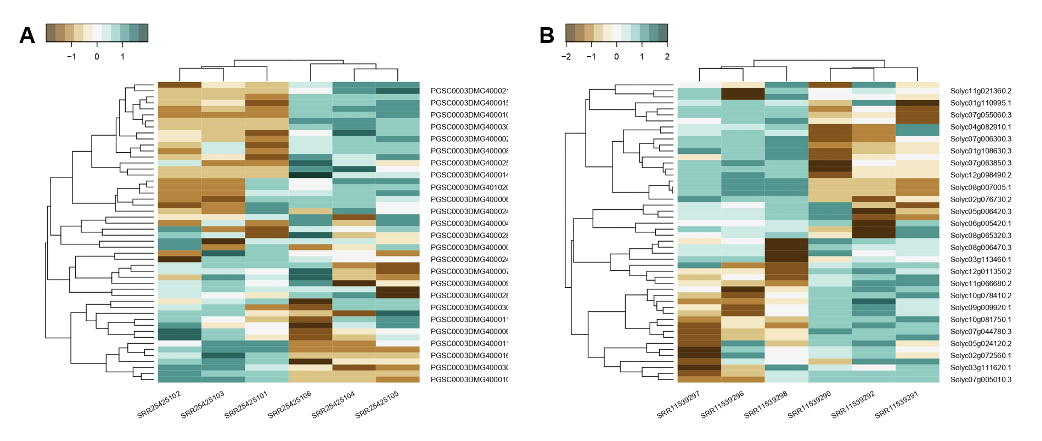
Drought stress is a major abiotic factor that limits crop productivity and threatens global food security. Tomato (Solanum lycopersicum) and potato (Solanum tuberosum) are economically important Solanaceae crops that exhibit distinct responses to water deficit conditions. This study compared drought-induced transcriptomic changes in both species using publicly available RNA-seq datasets. An integrated bioinformatics pipeline consisting of FastQC, Trim Galore, HISAT2, featureCounts, and DESeq2 was employed for quality assessment, read alignment, gene quantification, and differential expression analysis. Principal component analysis demonstrated clear separation between drought-treated and control samples in both species, indicating substantial transcriptomic alterations under drought stress. Sample-to-sample distance analysis further confirmed strong clustering consistency among biological replicates. Differential expression analysis identified numerous significantly regulated genes in both species, as revealed by MA and volcano plots. Potato exhibited broader fold-change distributions and more extensive differential expression patterns than tomato, suggesting a larger-scale transcriptional response to drought. Heatmap analysis of the top 50 differentially expressed genes clearly distinguished drought-treated samples from controls and revealed coordinated expression patterns associated with water deficit. Dispersion estimates and p-value distributions supported the reliability and statistical robustness of the RNA-seq datasets. The results demonstrate that drought stress induces substantial transcriptomic reprogramming in both tomato and potato while revealing differences in the magnitude of their molecular responses. These findings provide insights into drought-responsive regulatory mechanisms in Solanaceae crops and offer valuable resources for future studies on drought adaptation and crop improvement.
Downloads
Published
How to Cite
Issue
Section
License
Copyright (c) 2026 Paulina Jeany Rosalin

This work is licensed under a Creative Commons Attribution-NonCommercial 4.0 International License.