Ethnozoological Study of Animal-Based Traditional Medicine in Lorentak Hamlet, Entak Village, Ambal District, Kebumen Regency, Indonesia
Keywords:
Entak, etnozoology, traditional medicine, use value (UV)Abstract
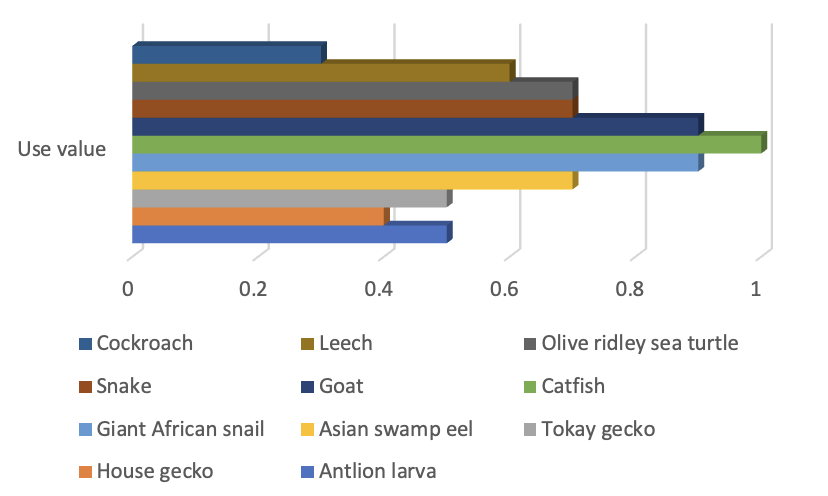
This study aimed to document the animal species used in traditional medicine in Entak Village, Kebumen Regency, and to analyze community perceptions and the relative importance of each species. A qualitative descriptive approach was applied through structured interviews with 10 respondents selected using snowball sampling. The results identified 11 animal species utilized for various ailments, with most remedies involving the whole body, while others used specific parts such as meat, eggs, or mucus. The Use Value (UV) analysis showed variation in species importance, reflecting differences in preference and frequency of use. Scientific evidence supporting the wound-healing properties of Channa striata and Achatina fulica strengthens the validity of certain local practices, while the use of Lepidochelys olivacea, classified as Vulnerable (VU) by the IUCN, raises conservation considerations. Overall, the findings highlight the persistence of ethnomedicinal knowledge and the need for its documentation and sustainable management.
Downloads
Published
How to Cite
Issue
Section
License
Copyright (c) 2026 Nisa Fitriani Nur Azizah Azizah

This work is licensed under a Creative Commons Attribution-NonCommercial 4.0 International License.