Spasial Determinants of Tuberculosis Incidents in West Java Province, Indonesia: A Geospatial Analysis of 2024 Surveillance Data
Keywords:
Environmental Factors, Geographic Information System (GIS), Population Density, Tuberculosis, West Java ProvinceAbstract
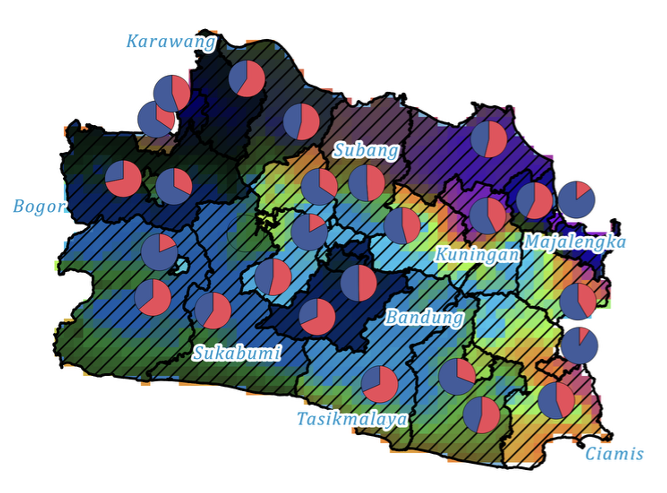
Tuberculosis (TB) remains a major public health problem in Indonesia, especially in densely populated areas such as West Java. This study analyzed the spatial determinants of TB incidence in West Java using 2024 surveillance data. A quantitative descriptive observational approach was used with secondary data from multiple sectors. TB incidence and healthcare facility data were obtained from the West Java Provincial Health Office, while population density data were sourced from the Central Bureau of Statistics of West Java. Environmental variables, including annual rainfall and temperature, were obtained from the WorldClim database. Spatial integration and overlay analyses were performed using QGIS version 3.44.5 to examine the relationships between TB incidence and demographic, environmental, and health system factors. The results showed a non-random spatial distribution of TB cases, with clustering in regencies with high population density and urbanization, particularly near the Jabodetabek metropolitan area. Population density was the main spatial factor associated with higher TB incidence. Rainfall and temperature acted as indirect factors by affecting indoor conditions that support the survival and transmission of Mycobacterium tuberculosis. Areas with more healthcare facilities reported higher TB case numbers, likely due to better case detection and surveillance rather than increased transmission. In conclusion, TB incidence in West Java is influenced by population density, environmental conditions, and health system capacity. Geographic Information Systems were effective in identifying high-risk areas and supporting spatially targeted TB control strategies for evidence-based public health planning.
Downloads
Published
How to Cite
Issue
Section
License
Copyright (c) 2026 Dinta Navy, Aditya, Putri Balqis, Shevilla Desta Aulia Sagita

This work is licensed under a Creative Commons Attribution-NonCommercial 4.0 International License.