Modeling Potential Habitat of Whale Shark (Rhincodon typus) to Support Conservation Efforts in Indonesia
Keywords:
GBIF, Whale Shark (Rhincodon typus), Habitat Suitability, MaxEnt, Southern Waters, Climate Change, QGISAbstract
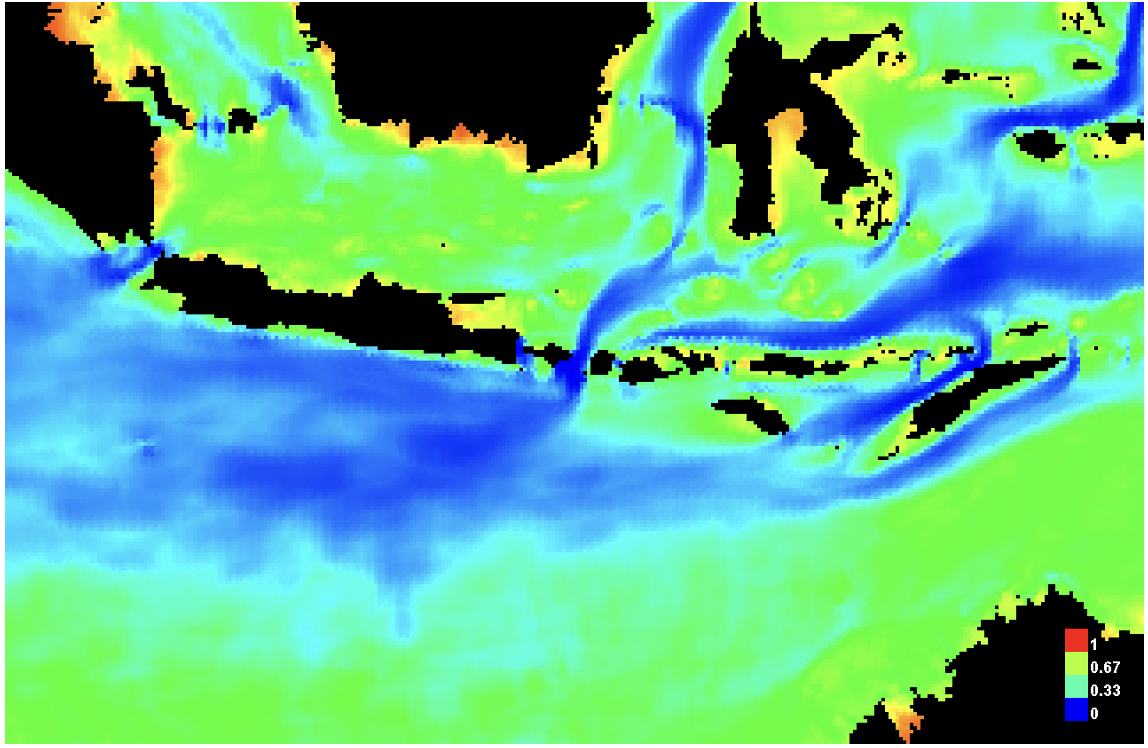
The whale shark (Rhincodon typus) is a protected marine species that plays an important ecological role and has high economic value through marine ecotourism. However, global climate change has the potential to affect the distribution and habitat suitability of this species through changes in oceanographic parameters. This study aims to model the habitat suitability of whale sharks in Indonesian waters under current conditions (2000–2014) and predict habitat changes in the future period (2040–2050) under the RCP 8.5 climate change scenario. Modeling was carried out using the MaxEnt-based Species Distribution Model with 95 whale shark occurrence points obtained from the GBIF. Marine environmental variables were obtained from Bio-Oracle version 2.2, including sea surface temperature, salinity, and sea current velocity. Spatial analysis and visualization of habitat suitability maps were performed using QGIS version 3.44.6. The results showed that the MaxEnt model has high performance with an AUC value > 0.9. Highly suitable habitat under current conditions is primarily concentrated in eastern Indonesian waters, particularly areas with high aquatic productivity. Future projections indicate changes and fragmentation of suitable habitat, with spatial shifts closely related to changes in sea surface temperature, salinity, and ocean current dynamics. Variable ocean current speeds play a crucial role in shaping feeding hotspots through oceanographic fronts and upwelling mechanisms. Climate change-based habitat suitability modeling is an important tool in supporting adaptive whale shark conservation planning. Information on changes in habitat distribution can provide a scientific basis for establishing and evaluating marine conservation areas and managing sustainable whale shark ecotourism.
Downloads
Published
How to Cite
Issue
Section
License
Copyright (c) 2026 Gita Shanaya Sihombing, Bagas Arja Theona, Nisa Fitriani Nur Azizah, Novantiara Mike Ardianata

This work is licensed under a Creative Commons Attribution-NonCommercial 4.0 International License.